
Simple instructions for correctly operating a portable fire extinguisher during an emergency along with other tips for extinguisher use & maintenance.
A portable fire extinguisher is one of the most effective tools for responding to small fires quickly and safely. When used correctly, it can help prevent a minor incident from turning into a devastating fire, protecting both lives and property. Research from EnGauge Inc. shows that in about 75% of fire incidents where a fire extinguisher is used in the United States, the fire department is not needed. This makes proper fire extinguisher placement and training essential. In this article, we’ll cover how to use a fire extinguisher, explain the key operating methods, and provide practical training tips for emergency preparedness.
Operating Fire Extinguishers: The Pass Method
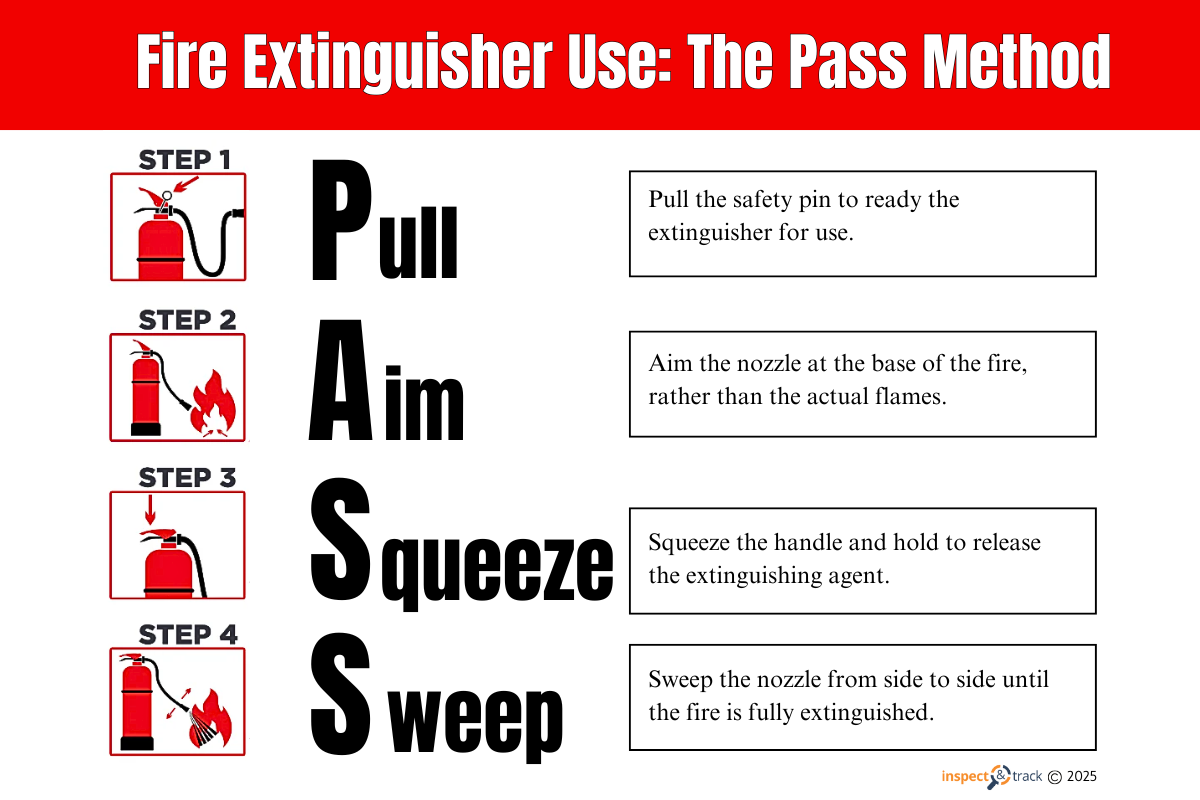
When it comes to safety, knowing how to use a fire extinguisher effectively is just as important as having one available. The most widely recognized method for extinguisher operation is the PASS method:
- Pull the Pin: Remove the safety pin near the top of the extinguisher. This will make it usable and break the tamper seal.
- Aim: Point the nozzle at the base of the fire, rather than the actual flames.
- Squeeze: Squeeze the handle to release the extinguishing agent contained in the bottle. Maintain the pressure on the handle during use.
- Sweep: Move the nozzle from side to side in a sweeping motion across the base of the fire. Do this until the fire is fully extinguished.
In addition to the PASS technique, it is important to ensure that you always always fight a fire with your back towards a viable exit route. This way, you have a safe path out of the building should the extinguisher malfunction or the fire become too large.
Also note that once a fire extinguisher has been used, even if only partially, it must be recharged or replaced immediately.
OSHA Requirements for Fire Extinguisher Training
While the PASS method is valuable information for anybody, it is especially important for workers to have. As a result, the Occupational Safety and Health Administration requires employers to provide their employees with sufficient education on the basics of fire extinguishers and their use (OSHA 1910.157(g)(1)).
Depending on the industry and likelihood of extinguisher use, training on extinguishers can range from a quick overview of the pass method to hands-on practice or inspection training. OSHA 1910.157(g)(1) indicates that employees should receive basic training when hired along with once a year after that.
If you are an employer, make sure to meet these requirements. Providing fire and life safety training not only helps meet regulatory requirements, but it also contributes to a safe workplace for you and your colleagues.
Additional Safety Tips
All industries should provide some form of fire safety training, whether that be discussing exit routes, practicing a fire drill, or training on equipment use.
To individuals, workers, and employers alike, here are some safety tips that can aid with fire extinguisher use or fire safety in general.
- Choose the Right Extinguisher: There are various types of extinguishers, each made to fight a different kind of fire (ex. Class A for ordinary combustibles, Class B for flammable liquids, Class C for electrical fires). Make sure to select the extinguisher classification that is best suited to fight a fire for your environment/type of fire.
- Pull the Fire Alarm: Before using the extinguisher, pull the alarm to alert others of the fire emergency.
- Stand at a Safe Distance: Generally, you want to remain somewhere between 6-10 feet away from a fire when using a fire extinguisher. This way you are close enough to put out the flame but far enough to avoid injury or escape if needed.
- Effectively Fight the Fire: When using an extinguisher, release the extinguishing agent in short bursts on the fire rather than simply holding down the handle. This will maximize its effectiveness. If the flame becomes too large or the extinguisher runs out, leave and exit.
- Be on High Alert: After using an extinguisher on a fire, take steps to check for reignition. In the event that a fire becomes too large to combat, notify the fire department. Regardless, have everyone vacate the building and do not re-enter unless it is deemed safe to do so.
- Inspect Fire Extinguishers Often: Building owners and workers are responsible for ensuring that all fire extinguishers are visually checked every 30 days. This way, extinguishers are well maintained and ready for use.
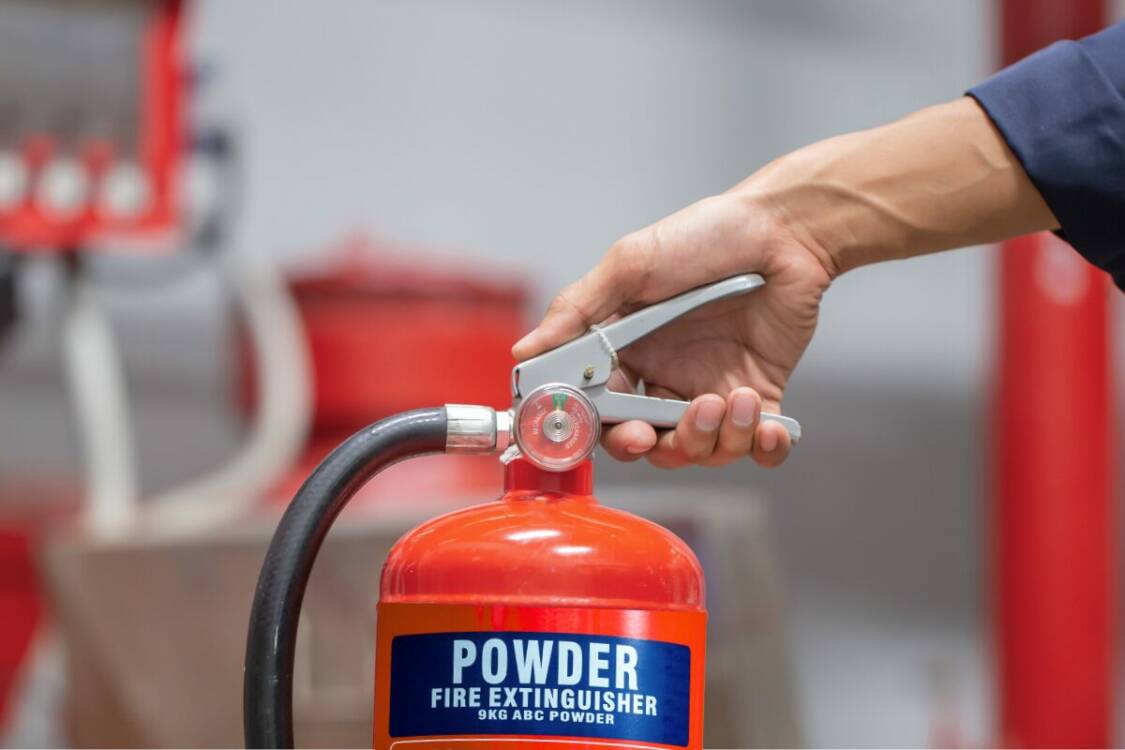
- Use Software for Extinguisher Maintenance: Keeping up with extinguisher checks, replacements, and inspections can be a hassle. Our fire safety software can be used to manage all your safety equipment, including fire extinguishers. Learn more by clicking here.

Streamline Your Equipment Maintenance
Keeping up with recurring compliance checks, expiration dates, and physical inspections across a large facility can quickly become overwhelming.
InspectNTrack simplifies fire safety management. Our dedicated inspection software utilizes barcode tracking to streamline your monthly checks, document history, and ensure your life-safety equipment is always ready when it matters most.