
Life Safety Inspection Checklist
A life safety inspection checklist is a comprehensive inventory of assets requiring consistent maintenance to ensure a building remains safe for occupants.
This document must account for every piece of fire and safety equipment at the facility. Below are standard items typically found in these essential audits:
Fire Alarms
Fire alarm inspection requirements vary depending on the property type, state and local regulations, and the National Fire Protection Association (NFPA) standards. NFPA 72 establishes the minimum requirements for the installation, performance, testing, and maintenance of fire alarm systems, including detection, signaling, and emergency communication systems. Generally, systems should be inspected and tested by licensed professionals at least once a year, though local codes may require more frequent checks (e.g., high-rise buildings in California require annual inspections, while others require them every three years). Occupational Safety and Health Administration (OSHA) Standard 1910.164 also offers valuable guidelines for these systems.
Inspection App Solutions
Fire alarm inspections should be performed by licensed or certified professionals who have the appropriate training and experience. The frequency of inspections can vary depending on the type of property and the state and local regulations. For example, in California, fire alarm systems in high-rise buildings must be inspected annually, while systems in other buildings must be inspected at least once every three years. OSHA Standard 1910.164 also offers valuable guidelines for the installation, maintenance, and testing of fire detection systems.
In general, it is recommended that fire alarm systems be inspected and tested at least once a year, with additional inspections and tests as needed. Regular inspections and maintenance are essential to ensure that fire alarm systems are functioning properly and can alert occupants in case of a fire.
Smoke Detectors
Smoke detectors must be inspected at least annually.NFPA recommends testing and inspecting them according to the manufacturer’s instructions, which typically includes cleaning the unit, testing the battery, and checking the detector’s sensitivity.”
Sprinkling Systems
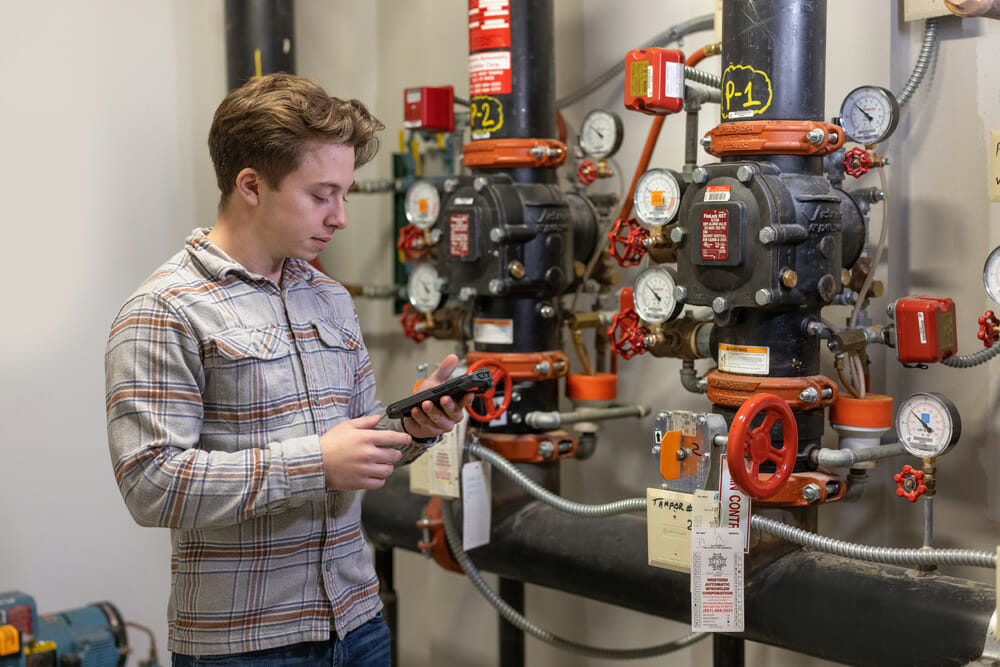
An additional way to prepare for life safety inspections is to review any fire sprinkler systems. According to the National Fire Protection Association (NFPA) 25: Standard for the Inspection, Testing, and Maintenance of Water-Based Fire Protection Systems, fire sprinkler systems must be inspected and tested at various intervals to ensure proper operation and maintenance. The standard outlines the required inspection and testing frequencies for various components of the fire sprinkler system, such as control valves, alarm devices, and water supply sources.
NFPA 25 outlines specific inspection intervals for fire sprinkler systems, requiring checks on a weekly, monthly, quarterly, annual, and multi-year schedule.
- Weekly: Verify control valves are in the correct position and the system is free of leaks.
- Monthly: Check alarm devices and control valves, and confirm adequate water supply pressure.
- Quarterly: Test alarm devices, control valves, the hydraulic nameplate, and the water flow alarm.
- Annually: Conduct a full evaluation and test all major components, including the fire pump.
- Multi-year: Comprehensively review and test elements like water supply sources, fire department connections, and antifreeze systems.
It’s also important to recognize that state and local jurisdictions may impose additional inspection and testing requirements. Building owners and managers should coordinate with their local fire department and code officials to ensure full compliance with all applicable standards.

Fire Extinguishers
When preparing for life safety inspections, be sure not to overlook fire extinguishers. The Occupational Safety and Health Administration (OSHA) Standard 1910.157 requires that all portable fire extinguishers in the workplace be inspected, maintained, and tested. The visual inspection of portable extinguishers or hoses should be conducted monthly. The hydrostatic testing of extinguishers should be done every 5 years for pressurized water, carbon dioxide, and wet chemical extinguishers, and every 12 years for dry chemical extinguishers.
The National Fire Protection Association (NFPA) 10 Standard for Portable Fire Extinguishers provides requirements to ensure that portable fire extinguishers will work as intended to provide a first line of defense against fires of limited size.
Regular inspections, maintenance, and testing of fire extinguishers are essential to ensure that they are functioning properly and can be used effectively in case of a fire emergency.
Emergency Lighting
Another checklist item for life safety inspections is emergency lighting. The inspection requirements for emergency lighting are governed by various regulations and standards. The National Fire Protection Association (NFPA) 101, Life Safety Code, requires that emergency lighting be tested for a minimum of 90 minutes annually to ensure the full capacity of the batteries. The testing can be done through a self-test method, which allows the units to test themselves and indicate any issues via an indicator light.
NFPA 101 also requires that emergency lighting be provided for all means of egress, including exits and pathways leading to them, stairs designated for emergency exit, aisles, corridors, ramps, escalators, and other passageways that lead to an exit.
The Occupational Safety and Health Administration (OSHA) requires that emergency lighting systems be inspected and tested monthly to ensure that they are in good working condition. OSHA Standard 1910.37 also mandates that exit routes be adequately lighted so that an employee with normal vision can see along the exit route, and that each exit must be clearly visible and marked with a sign reading “Exit”.
In addition, emergency lighting systems must be designed to remain illuminated for at least 90 minutes, and illumination levels are allowed to decline to an average of 0.6 foot-candles, with a 0.06-foot-candle minimum, at the end of the 90-minute period.
Exit Signs
Both NFPA 101 and OSHA Standard 1910.37 mandate that exit signs be illuminated, visible from any direction of approach, and installed at every exit or hallway leading to an exit. To maintain compliance, exit signs must be inspected and tested at least once every 30 days. This inspection ensures the illumination is functioning and the signs remain clean, legible, and unobstructed.
Fire Doors
Both NFPA 80 and OSHA Standard 1910.36 require fire doors to be inspected and tested annually. Inspectors must ensure the doors are not blocked or obstructed, check for missing or damaged labels and hardware, and measure gaps between the door and frame. The doors must also be tested to confirm they close and latch properly within the manufacturer’s specified closing speed.
Flammable Liquids and Chemicals Storage
A life safety inspection checklist item that can be easily overlooked is flammable liquids and chemicals. Because of this, flammable cabinets are essential for safety storing flammable liquids and chemicals in the workplace. The National Fire Protection Association (NFPA) 30: Flammable and Combustible Liquids Code offers guidelines on the proper installation, use, and inspection requirements for flammable cabinets. The frequency of flammable cabinet inspections depends on several factors, including the type of cabinet, type of flammable liquids or chemicals stored, and the regulatory requirements applicable to the workplace.
Generally, flammable cabinets should be inspected at least once a year to ensure they are in good working condition and comply with safety regulations. However the Occupational Safety and Health Administration (OSHA) Standard 1926.152 requires flammable cabinets to be inspected every three months.
Managing Life Safety Inspections
This is only a sampling of life safety inspections that are important for keeping a workplace safe and in compliance. There are requirements that govern all types of equipment such as fall protection, PPE, ladders, ventilation hoods, safety showers, and more. Without an effective system in place, ensuring that the proper inspections are being performed on the proper schedules can be a daunting task. InspectNTrack software offers a single system that manages every type of fire and life safety requirement within a facility. It stores an inventory of equipment within the facility and associates the proper regulatory code to each equipment. This allows inspections to be performed accurately and on time with a simple scan of a barcode on the equipment.