
Common Fire Hose Inspection Failures and How to Avoid Them
In this article, we’ll examine some of the most common culprits of fire hose inspection failures, including their potential catalysts and ways they can be mitigated. Being aware of and on the lookout for these failures is of the utmost importance, as fire hoses can only be relied upon if they are diligently maintained.
Each of the failures outlined below puts hoses at risk of compromised effectiveness, thus delaying emergency response and increasing risk of injury, death, and property damage during a fire.
Whether you are a building owner, fire marshal, or other, knowing the most commonly cited fire hose inspection failures to keep an eye out for will help you get the most out of each length of hose under your care.
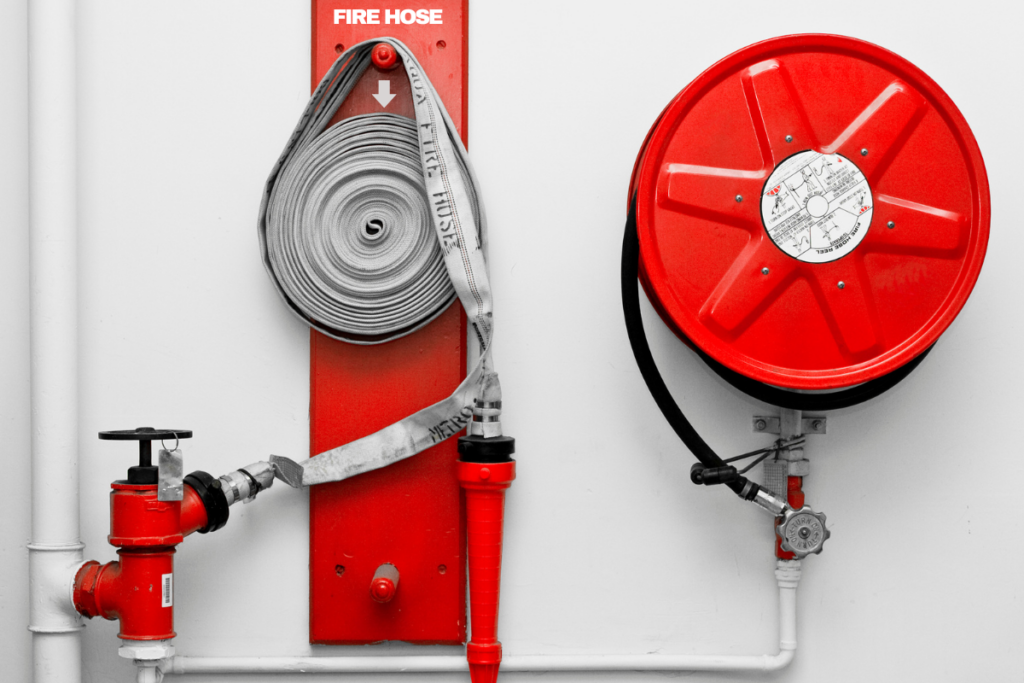
Common Issues For Fire Hoses
Leaking
Leakage can occur anywhere on the hose, including joints and couplings. Unsurprisingly, leaking leads to reduced water pressure, thus compromising a hose’s effectiveness.
Your hose may be leaking if you notice any of the following:
- Hissing or dripping
- Decreased water flow
- Water pooling outside of hose
Leakage is one of the most common and dangerous fire hose inspection failures. Since a leaky hose cannot maintain the necessary and expected water pressure to put out fires quickly, it must be addressed quickly.
Potential causes:
- Damaged couplings
- Exposure to intense heat → brittleness → cracking
- Liner delamination
- Loosened fittings and connections
- Manufacturing, assembly, or installation defects
- Punctured or worn hose material
Kinking
Another one of the common fire hose inspection failures that is particularly nasty is kinking. Not only do kinks inhibit the flow of water through a hose, thus decreasing discharge pressure, they damage a hose’s lining and make deployment harder.
Unfortunately, addressing kinks can be a challenge, especially if it is not done early on; Kinks only get harder to undo as time progresses
Potential causes:
- Improper storage and/or coiling technique
- Hasty and/or rough deployment of hose
- Low-quality hose material
Corroded Fittings
Corroded fittings can lead to other issues, such as leakage, by weakening the connection between the hose and the fittings. Corrosion of fittings can also lead to difficulty or even inability to seal or unseal a hose to/from fire hydrants, rendering said hose completely useless.
Potential causes:
- Exposure to
- Moisture
- Salt
- Chemicals, acids, alkalis, cleaning solutions
- High temperatures
Surface Damage
Cracking, splitting, and discoloration are all signs that a hose’s surface has been significantly damaged. The reason that surface damage can lead to fire hose inspection failure is because it can cause difficulty when deploying a hose, wasting valuable time.
Some wear and tear over time is normal and expected, but the factors listed below can accelerate the process.
Potential causes:
- Exposure to
- Sunlight
- Humidity
- Extreme temperatures
- Rough handling of hose
- Improper hose storage
Internal Wear
The outside of a hose isn’t the only part susceptible to damage; Unfortunately, the interior is vulnerable too. A hose’s inside is at risk of hosting mold, mildew, and odors, ultimately leading to the degradation of its internal liner.
Internal wear is a dangerous fire hose inspection failure because it interferes with a hose’s ability to hold pressurized water.
Potential causes:
- Improper cleaning techniques (using harsh chemicals and/or abrasive tools)
- Storing wet or damp hose
- Repeated chemical exposure
- Exposure to water pressure through regular use
- Using extreme heat to dry hose after cleaning
Prevention of Fire Hose Failures
To keep fire hose inspection failures from occurring in the first place, follow these recommendations:
- Choose high-quality hose made from top-grade material
- Store properly in an appropriate area
- Cool
- Dry
- No direct sunlight or chemical exposure
- Unobstructed
- Well-ventilated
- Clean and inspect hose after each use
- Use water and mild detergents for the hose itself and a wire brush for fittings
- Make sure hose is properly dried (by means of hanging or a hang dryer) before storing it
- Use proper coiling techniques when storing hose
- Not too tight or loose
- Deploy and handle hose carefully
- Apply a protective coating to fittings and use a protective cover on the hose itself
- Lubricate moving parts monthly and threads as needed
- Replace damaged couplings and gaskets promptly
- Apply rust inhibitor to fittings
- Tighten fittings as needed
- Be diligent in performing regular ITM (inspections, testing, maintenance)
To learn more about how InspectNTrack works for fire hoses specifically, check out the Fire Hose section of our Solutions page!
A Bit More on Fire Hose ITM
While professional inspections need only be conducted once a year before annual pressure testing, visual inspections should be performed every month. During visual inspections, check for the aforementioned fire hose inspection failures, as well as the following:
- Abrasions
- Burns
- Chemical damage
- Cuts
- Debris
- Liner delamination
- Mildew
- Mold
- Rot
- Vandalization
- Vermin
Routine pressure testing should occur annually and after a hose has been subject to any repairs, replacements, or exposure to chemicals or extreme temperatures. To learn more about testing procedures for different types of fire hose and to get tips and tricks on how to safety conduct tests, check out our article on NFPA 1962.
Hose maintenance, as outlined in the Prevention section of this article, is vital in keeping small issues from worsening. Left uncared for, hose will fail when it is needed most, which can have deadly consequences. Adequate maintenance, on the other hand, guarantees that hoses can be counted on, keeping you safe from both physical danger and non-compliance fines.
For more information on fire hose ITM, see NFPA 1962 Standard for the Care, Use, Inspection, Service Testing, and Replacement of Fire Hose, Couplings, Nozzles, and Fire Hose Appliances.
If you are responsible for ITM for lengths of fire hose, it is likely that you are also responsible for ITM for other safety assets, such as fire extinguishers, hydrants, hose houses, and more—each of which are on their own schedules. Trying to coordinate these schedules and remember which assets have been checked for this month and which haven’t can be overwhelming, especially if you are delegating these tasks to others.
That’s why InspectNTrack is the safety asset inspection software preferred by field inspectors and their administrators. Not only does InspectNTrack automatically display due inspections to end users, it also allows administrators full visibility into the work of end users, ensuring accountability.