What to Look for When Conducting Fire Hose Inspections
Whether you use an attack, supply, hard suction, forestry, booster, or decontamination hose, regular fire hose inspections are vital to maintaining hose integrity. In this article, we’ll go over how frequently you should conduct fire hose inspections, as well as what exactly you should be on the watch for during said inspections.
Fire hose inspection frequency
At the very least, fire hoses should be inspected once every year, even if hose has been sitting in storage, unused. For hoses that have been seeing some action, additional inspections after each use are also necessary.
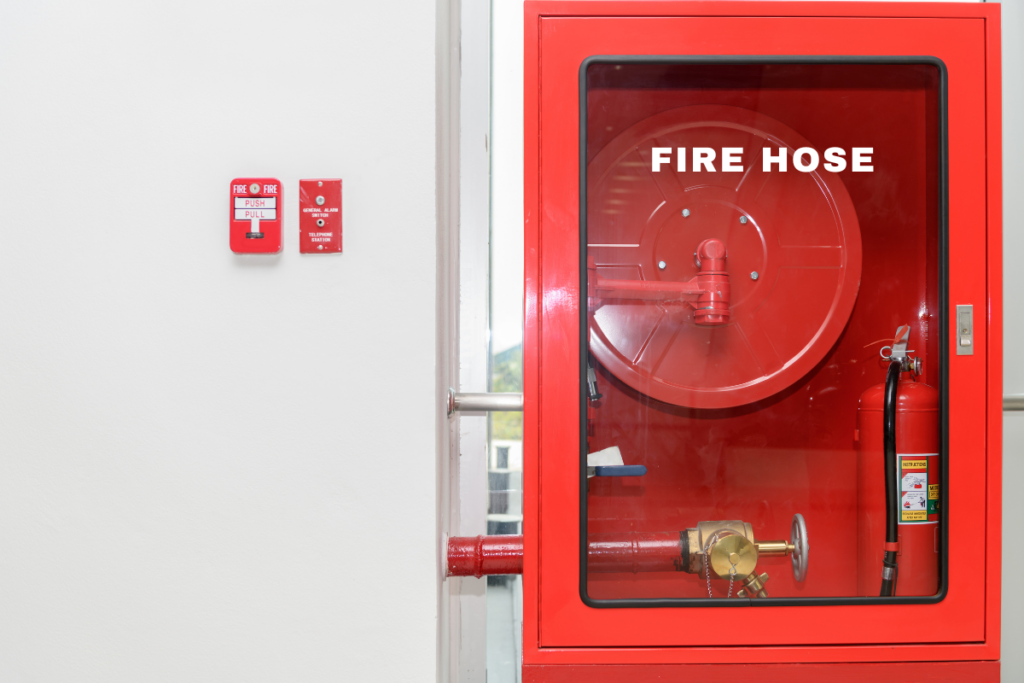
While annual and post-use inspections should be done by professionals, it is recommended that you also conduct more frequent self-inspections as well. You could pair fire extinguisher and fire hose inspections together and do them at the same time each month for ease of scheduling.
Finally, be sure to conduct an inspection before placing a hose in storage.
What to look for during a fire hose inspection
Below is a list of things to look for. Click on each item to see extra tips and tricks on how to inspect certain hose pieces, as well as how issues can be both fixed and avoided in the first place.
Where is all of this coming from?
At this point, you might be thinking, “Well this all sounds great but why do I have to inspect my hose when and how I do?” The answer is thanks to the National Fire Protection Association, or NFPA. A self-funded non-profit committed to fire safety, the NFPA publishes various standards outlining how to take care of different safety assets.
The standard concerning fire hose inspections is NFPA 1962, Standard for the Care, Use, Inspection, Service Testing, and Replacement of Fire Hose, Couplings, Nozzles, and Fire Hose Appliances. Though the NFPA has no legal authority on its own, its standards are often adopted by local jurisdictions. Be sure to check with your authority having jurisdiction to confirm that the standards for fire hose inspections laid out in NFPA 1962 apply to you.
To conclude…
Properly maintaining fire hose is crucial. If firefighters show up with a non-functioning hose, it further endangers not only themselves but also the people they had been called to save. To be sure that your hose can be counted on when it matters most, use a digital inspection tool to document and store all information regarding fire hose inspections.
InspectNTrack’s fire hose inspection software is the perfect solution thanks to its templates pre-filled with NFPA 1962-compliant questions. Among myriad other features, InspectNTrack also automatically organizes each fire hose in your building into the most optimal route and lets inspectors track progress along said route during each inspection. Check out InspectNTrack today and never miss a fire hose inspection again!