In this article, we’ll go define what an AHJ is and explore why AHJ inspections exist. Lastly, we’ll provide you with some tips to make sure AHJ inspections—and working with AHJs in general—are as positive experiences as they can be.
What are AHJs?
An authority having jurisdiction, or AHJ, can be an individual, office, department, or organization. Regardless of which category an AHJ falls into, it is imperative that they are qualified to carry out the responsibilities of an AHJ.
Such responsibilities include:
- Approving designs, equipment, materials, installations, and/or procedures
- Conducting inspections
- During milestone stages of construction
- After construction but before occupancy
- After incidents or violations
- Annually to verify that fire and life safety systems are functional and up to code
- Interpreting and enforcing codes
- Issuing permits
- Reviewing plans
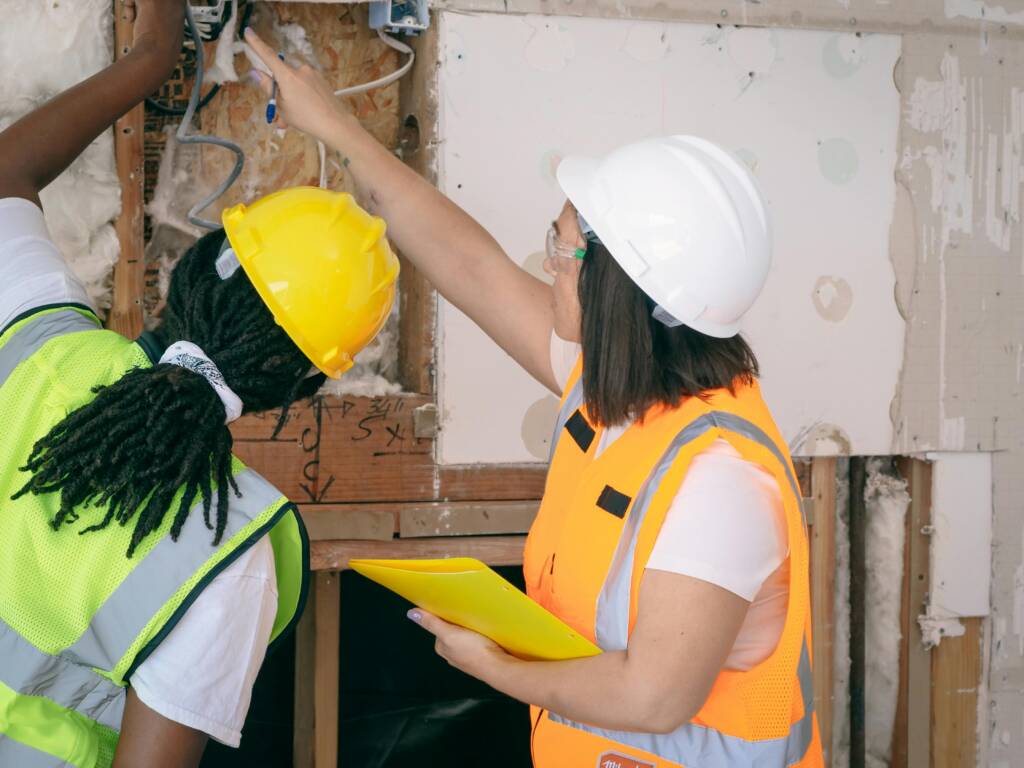
Here are some examples of different people or organizations that are often considered AHJs in the right contexts:
- Building officials
- Chiefs of a fire prevention bureau
- Electrical inspectors
- Environmental safety departments
- Fire chiefs
- Fire departments and fire marshals
- Health departments
- Labor departments
- Planning and zoning officials
- Private sector
- Insurance companies
- Property owners
- Utility companies
While some AHJs, such as insurance companies and property owners, have authority due to contracts, others, like government entities, derive their authority from the law.
The number of AHJs you and your building are subject to depends on the occupancy of your building. For instance, the Occupational Safety and Health Administration (OSHA) would be an AHJ for both a commercial building and a hospital, but only the hospital would be subject to the Centers for Medicare & Medicaid Services (CMS) as an AHJ as well.
What is the purpose of an AHJ inspection?
To get an idea of how varied AHJ inspections can be in their goals, take a look at some of the industries AHJs are found in:
- Accessibility
- Construction
- Electrical
- Emergency response
- Environmental hazards
- Fire protection
- Food service
- Mechanical
- Natural gas
- Public health
- Water and wastewater
Because there are so many different sectors that are subject to AHJs, it is impossible to give a one-size-fits-all answer as to what the purpose of AHJ inspections is. However, speaking very broadly, AHJ inspections aim to verify that fire and life safety codes are being followed.
What exactly inspectors will be on the lookout for during AHJ inspections depends on the industry they are working in. For instance, it would make sense for your local fire marshal to act as an AHJ and inspect your building’s fire protection systems, but it wouldn’t make sense for the marshal to inspect your plumbing system; that would fall to an AHJ like your local health department. Just because someone, or some department/organization/etc., is qualified to act as an AHJ in one area of construction and code compliance does not mean they are qualified to act as an AHJ in every area.
Each aspect of safety comes with its own specific requirements and codes. Some of the most common codes enforced by AHJs are:
- Various NFPA codes, such as the National Electrical Code (NEC)
- The International Building Code (IBC)
- Various OSHA standards
It is important to note that codes are often updated faster than AHJs can keep up. Though the NFPA’s most updated version of the Life Safety Code came out in 2024, for instance, your AHJ may still be enforcing the 2012 edition. Sometimes local jurisdictions have adopted the most recent iteration of a code but made amendments to it. Make sure you understand precisely what is expected of you in an AHJ inspection.
All in all, AHJ inspections seek to reduce safety risks by verifying the necessary safeguards against hazards are in place and that facilities are prepared for both day-to-day usage and emergencies.
How to foster a relationship with your AHJ and be prepared for AHJ inspections
Do:
Don’t: