
Let’s face it: monthly inspections of fire extinguishers can be a hassle. As important as inspections are, they can feel like a waste of time if every other aspect of your safety program is going to plan and fires never occur. While inspecting extinguishers is necessary, feeling put-out by having to do so isn’t. If you’ve ever wondered how to inspect a fire extinguisher in 1 minute and 1 minute only—without having to cut corners—or if such a thing is even possible, this article will show you a way to make your dream a reality.
How to inspect a fire extinguisher
Though this may not be listed on your inspection checksheet, donning safety glasses is the true first step to fire extinguisher inspection. Even if you have never had an extinguisher accidentally discharge during an inspection, there is always a possibility that one will. As every safety professional knows, it is much better to be overly cautious than not cautious enough.
To start your actual inspection, make sure that the fire extinguisher being inspected is where it should be, and that nothing is obstructing view of its location.
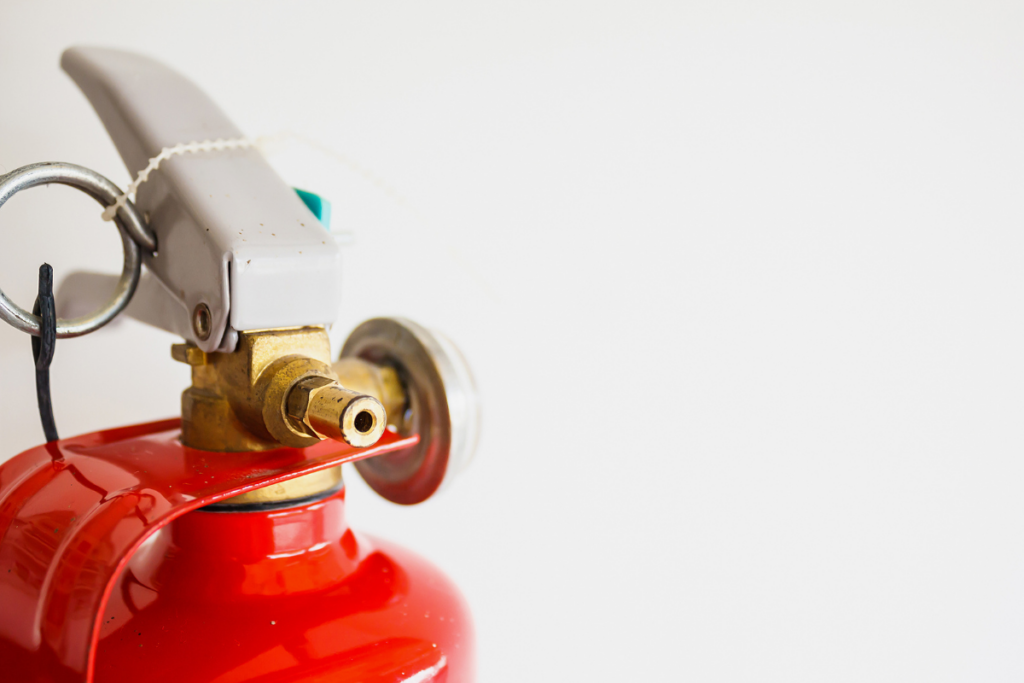
Next, look over the extinguisher’s exterior, including the cylinder, hose, and nozzle for dents, corrosion, leaks, and cracks. Also check that the locking pin is secure and in the correct position.
Verify that the pressure gauge is in the green zone and that the extinguisher is tagged with an inspection tag.
Finally, create a report on your observations and inspection results.
- How to inspect a fire extinguisher
- Types of fires and extinguishers
- Water fire extinguishers
- Carbon dioxide fire extinguishers
- Foam fire extinguishers
- Dry powder fire extinguishers
- Dry chemical fire extinguishers
- Wet chemical fire extinguishers
- Expediting the process: How to inspect a fire extinguisher in 1 minute
- Why regular fire extinguisher inspections matter
- Final thought
- Want to learn more about InspectNTrack?
- Navigation
- Quick Links
Types of fires and extinguishers
In the United States, there are 5 classes of fires that are differentiated from each other based on the materials they burn in:
- Class A: papers, plastics, rubbers, textiles, woods
- Class B: flammable liquids and gases like alcohols, greases, oils, and tars
- Class C: electrical equipment such as appliances and tools plugged into outlets
- Class D: flammable metals such as lithium, magnesium, potassium, titanium, and zirconium
- Class K: fats and cooking oils such as animal and vegetable oils
Just as there exists a variety of kinds of fires, multiple kinds extinguishers made especially to combat specific fires exist too. Though basic inspection procedure is the same for all, some types require completion of additional inspection tasks. To know how to inspect a fire extinguisher in 1 minute, you first must know what kind of fire extinguisher you are dealing with.
Water fire extinguishers
Recommended for: Class A fires
Additional inspection steps: Check water levels and, if the extinguisher is being kept in a cold environment, check for internal freezing.
Carbon dioxide fire extinguishers
Recommended for: Class B and C fires
Additional inspection steps: Weigh the extinguisher and compare with the weight on the label. If the extinguisher weighs less than the label says it does, it could be leaking.
Foam fire extinguishers
Recommended for: Class A and B fires
Additional inspection steps: Look for any damage of the foam concentrate cartridge.
Dry powder fire extinguishers
Recommended for: Class D fires
Additional inspection steps: Check that powder is not caking or clumping (shake occasionally to prevent this).
Dry chemical fire extinguishers
Recommended for: Class A, B, and C fires
Additional inspection steps: Check that powder is not caking or clumping (shake occasionally to prevent this).
Wet chemical fire extinguishers
Recommended for: Class K fires
Additional inspection steps: Check agent levels and nozzle spray pattern.
Expediting the process: How to inspect a fire extinguisher in 1 minute
Given the number of steps it takes to inspect a fire extinguisher, you might guess that the process takes a few minutes. However, using InspectNTrack’s digital system you’ll know how to inspect a fire extinguisher in 1 minute alone!
With InspectNTrack, you simply scan the barcode on the extinguisher’s protective cabinet and the barcode on the extinguisher itself. The InspectNTrack app automatically checks that the extinguisher is in the same location as it was when it was last inspected (the location is updated if the extinguisher was moved).
Then, the extinguisher’s serial number, open issues, last inspection, and current inspection are pulled up. To access the list of inspection questions, tap today’s inspection. Questions are made to ensure compliance with NFPA 10 Standard for Portable Fire Extinguishers and are as simple as can be. Questions require only a simple yes/no or pass/fail answer, though the option to add notes and images is also available.
Results are automatically saved to both the extinguisher’s record and the inspection report.
Should your inspection fail, InspectNTrack is able to automatically perform follow up actions, such as sending out emails and opening discrepancies or work orders.
If you have multiple fire extinguishers you need to inspect, InspectNTrack automatically provides you with the most optimal route to take and tracks which inspections have been completed as you go along. You are able to see each extinguisher’s location and status right on the app.
Another way to keep inspections moving quickly is to make sure extinguishers are in top condition, even on non-inspection days.
For example:
- You see something obstructing view of an extinguisher → move it to its proper storage location
- You need to remove an extinguisher’s locking pin or seal for a time → replace them as soon as possible
- You spot any damage on an extinguisher → report it immediately
Why regular fire extinguisher inspections matter
According to a 2017 report by the NFPA, 84% of fires in buildings with sprinkler systems never grow large enough to activate the sprinklers. Thus, fire extinguishers must be ready to go.
Luckily, when they are, they are highly effective. According to a 2021 survey conducted by the Fire Industry Association, extinguishers put out 93.5% of fires they were used on.
Monthly inspections ensure that fire extinguishers are able to be relied upon in the moments that really count. By complying with safety regulations and standards, you are guaranteeing the highest degree of safety that you are able to provide to your employees and customers. Now that you know how to inspect a fire extinguisher in 1 minute, you can do all this and easily ensure you are in good standing with OSHA while doing so.
Final thought
Now you can learn how to inspect a fire extinguisher in 1 minute or less by getting rid of inefficient spreadsheets and relying on barcodes and a speedy mobile app!